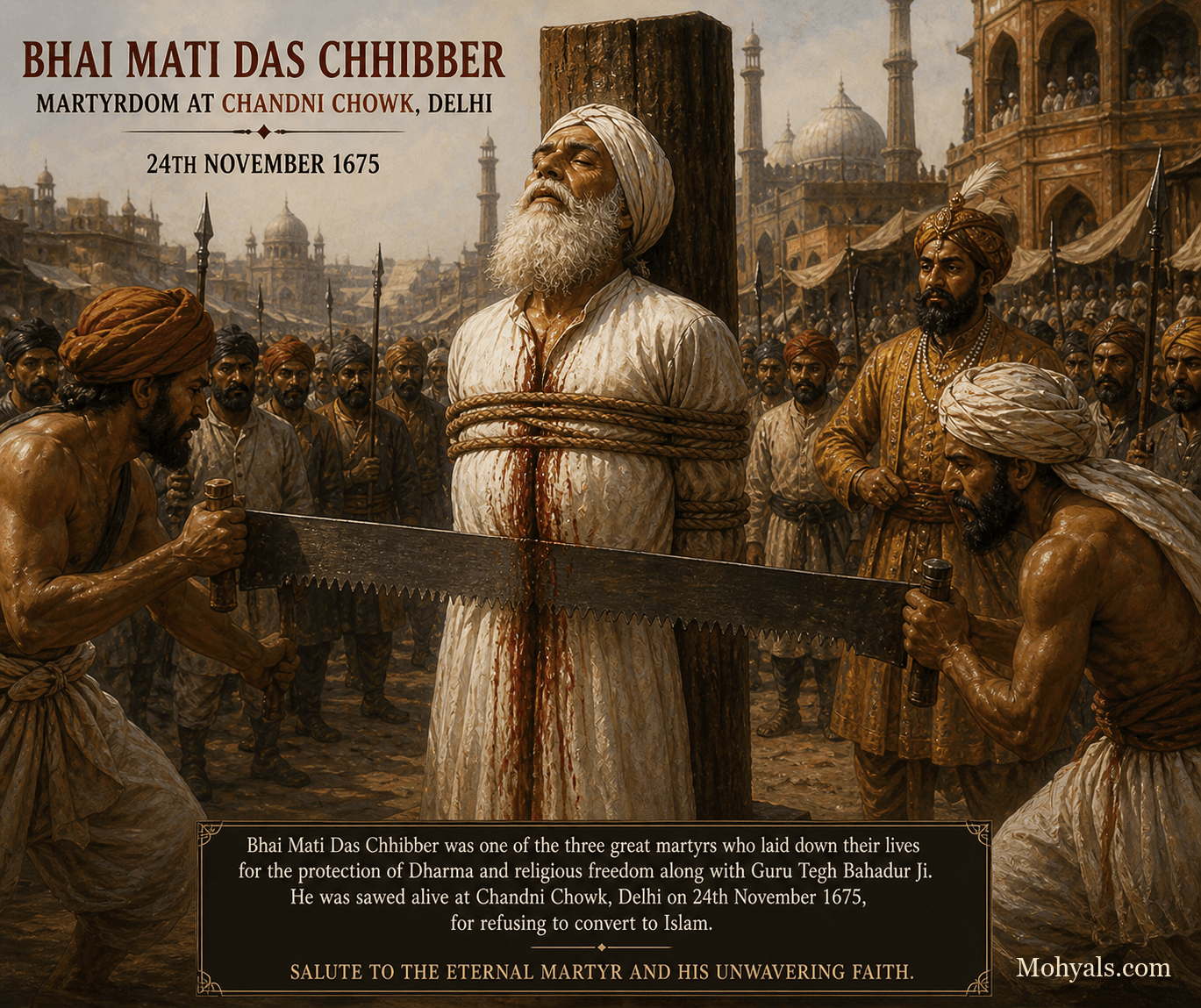
Bhai Mati Das Chhibber
A defining Mohyal story of conviction, sacrifice, and standing with Guru Tegh Bahadur Ji in Chandni Chowk, Delhi, in 1675.
Read Story
Heroes & Martyrs
This section gathers some of the figures and memories through which Mohyal families remember service, sacrifice, and moral responsibility.
A defining Mohyal story of conviction, sacrifice, and standing with Guru Tegh Bahadur Ji in Chandni Chowk, Delhi, in 1675.
Read Story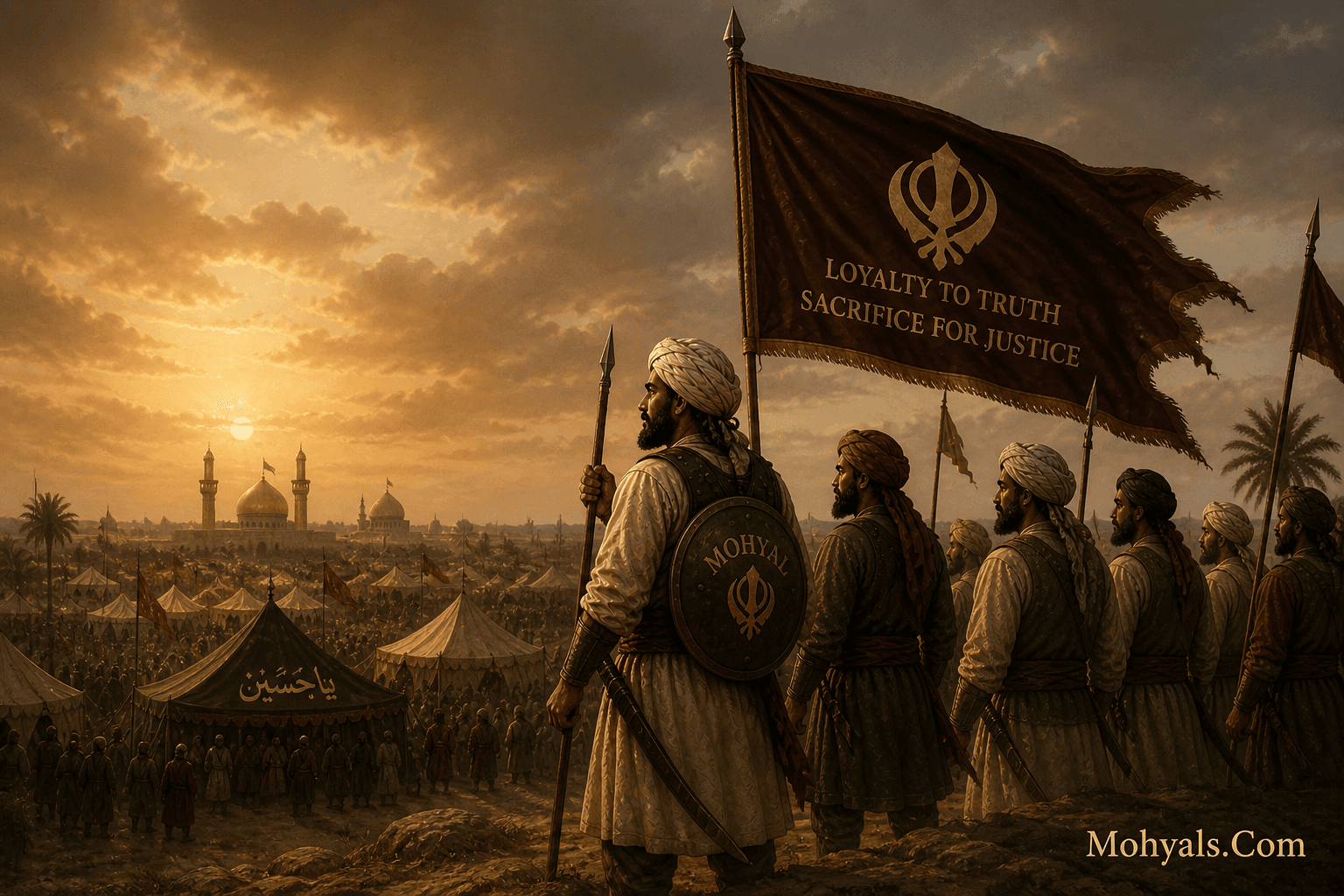
Preserved in community memory as a story of loyalty, sacrifice, and moral alignment that continues to shape Mohyal identity.
Read Story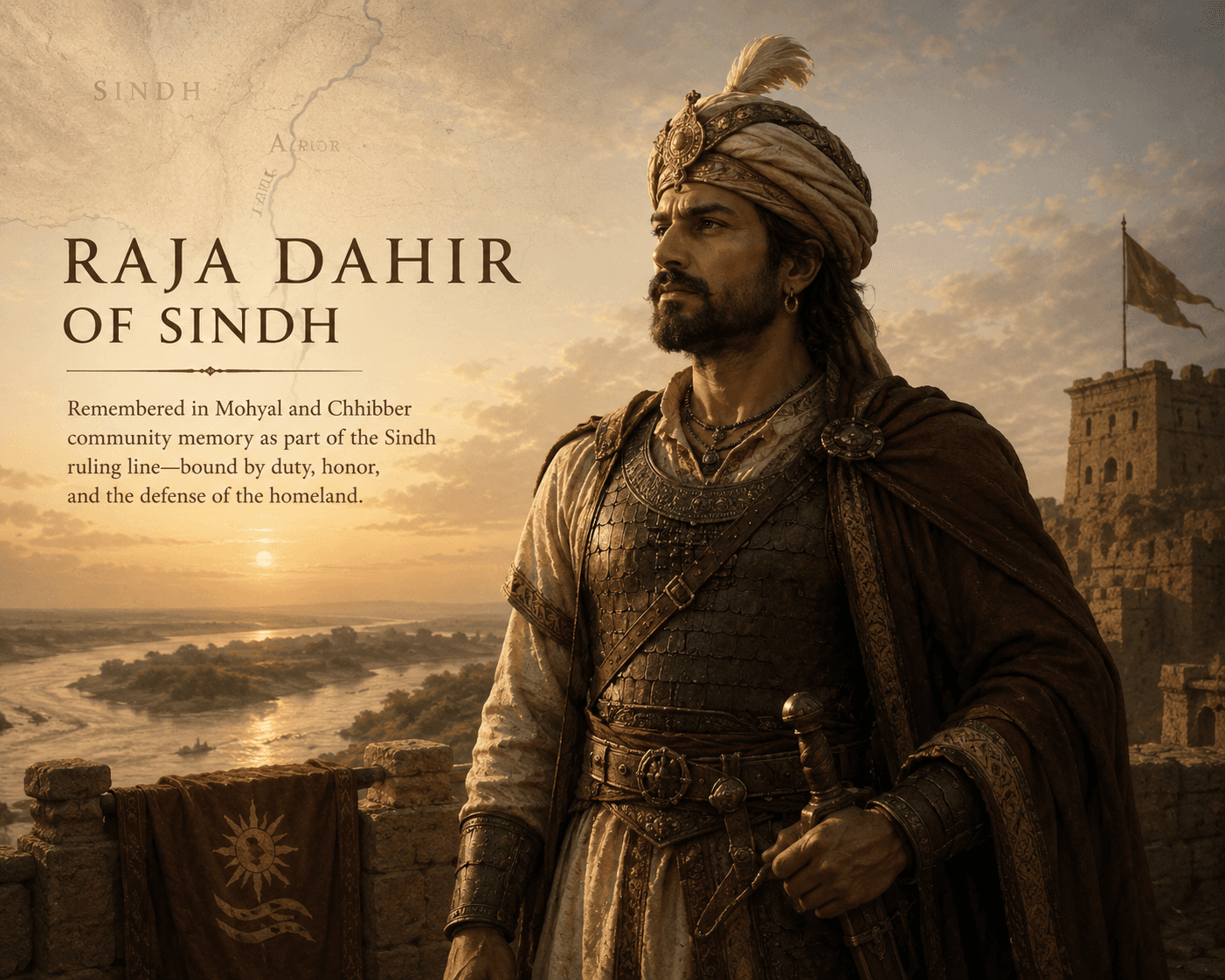
A long-form heritage feature on Sindh, conquest, frontier duty, and the Mohyal and Chhibber memory that kept Raja Dahir's name alive.
Read StoryKaryala Chhibber Line
Within Mohyal and Sikh community memory, the Chhibbers of Karyala form one of the most continuous lines of service, administrative trust, scholarship, and sacrifice. The figures below are presented as part of that remembered lineage, with more detail to be added as additional material is contributed.
Karyala Chhibber Line
Baba Praga, also remembered as Bhai Prag Das, is described in Sikh and Mohyal memory as a Chhibber of the Mohyal Brahmin tradition whose family was connected with the Guru line from the time of Guru Nanak. Later accounts place him close to Guru Hargobind Ji, among the early Akal Takht military leadership, and among the first Sikh groups remembered for shahidi. His memory also survives in Karyala and in Chowk Paraga Das at Amritsar.
Dewan to the Gurus
Remembered as the son of Baba Praga, Dwarka Das is described in community history as Dewan to Guru Har Gobind and continuing in service into the period of later Gurus up to Guru Har Rai.
Karyala Succession
Also remembered as Bhai Lakhi Das, he was the son of Dwarka Das and is described as inheriting the Dewan role after his father. Community memory also remembers him as the first Chhibber of Karyala to receive the title of Bhai from a Guru.
Administrative Service
Remembered as part of the same Karyala Chhibber line, Bhai Dargah Mal is described in community history as carrying forward Dewan-style service in the Guru period. Different retellings vary on the exact succession line, but they agree in placing him within the same extended family tradition of trust and administrative responsibility.
Martyrdom in Delhi
A descendant of the same family line, Bhai Mati Das is remembered for refusing forced conversion and accepting martyrdom in Delhi on 9 November 1675 while insisting that he be allowed to face Guru Tegh Bahadur Ji during his execution.
Scholar and Martyr
The younger brother of Bhai Mati Das, Bhai Sati Das is remembered as a scholar of Persian and as a martyr who also refused conversion. Community memory preserves him as part of the same Chhibber family sacrifice in November 1675.
Tutor to Guru Gobind Singh
Remembered in Chhibber and Sikh historical memory as a descendant of the same Karyala family, Bhai Chaupa Singh Chhibber is associated with the care, instruction, and guidance of Guru Gobind Singh.
Dewan to Guru Gobind Singh
Remembered as a nephew of Bhai Mati Das, Bhai Sahib Singh is described in community history as Dewan to Guru Gobind Singh. He is also sometimes confused with a different Sahib Singh among the Panj Pyare, and the page preserves that distinction carefully.
Defense of Harmandir Sahib
Remembered as the son of Bhai Sahib Singh, Bhai Gurbakhsh Singh is associated with the defense of Harmandir Sahib during a raid by Ahmad Shah Durrani, extending the Karyala Chhibber memory of service and sacrifice into another generation.
Historical Preservation
Remembered as the son of Bhai Gurbakhsh Singh, Bhai Kesar Singh Chhibber is especially important for authorship of Bansavalinama Dasan Patshahian Da, one of the major texts preserving Guru-period and Chhibber-linked memory.
Community memory also preserves later descendants of this wider Chhibber line, including Bhai Charan Singh, Bhai Gaj Singh, Bhai Wazir Singh, and Bhai Jai Bhan, as recipients of senior responsibilities, jagirs, stipends, and honors under Maharaja Ranjit Singh.
Some genealogical details in later retellings vary across community sources. Mohyals.com presents these entries as part of inherited Chhibber and Sikh historical memory while welcoming additional documents, family records, and corrections.
Historical Figures & Lineages
Mohyal memory includes figures connected with scholarship, administration, rulership, resistance, and service. Some appear in chronicles and inscriptions; others are described in Mohyal historical writing, later community historiography, and oral tradition. This section presents them carefully as part of the wider Mohyal heritage conversation.
Modern Mohyal historical study has also tried to revisit older narratives through closer use of primary sources, research journals, and later works such as Afghanistan Revisited. These entries are presented in that spirit of careful community study rather than as closed or final claims.
Chhibber Lineage Tradition
Described in Mohyal historical writing as a Brahmana administrator from Mathura who rose to rule Sindh. Later Mohyal historiography remembers him as part of the ancestry traditionally associated with the Chhibber clan.
Sindh / Chhibber Tradition
Remembered in community history as part of the Sindh ruling line linked with Chhibber ancestry. His place in wider Indian history is best approached with source context, period awareness, and careful comparison with primary chronicles.
Datt Lineage Tradition
Mohyal historical writing links the Brahmana figure Kallar and the later Kabul ruler Samantadeva with the ancestry of the Datt clan and the Brahmana Hindu Shahi tradition of Kabul and the Punjab.
Datt / Kabul Tradition
Associated in later Mohyal historiography with the Kabul ruling line descended from Samantadeva and remembered as part of the community's warrior-Brahmin historical narrative.
Vaid Lineage Tradition
Described in Mohyal historical writing as a ruler of Punjab and Kabul who tried to resist the rising power of Ghazni. Later Mohyal historiography associates Jayapala with the Vaid royal line.
Vaid Lineage Tradition
Remembered as a successor in the Hindu Shahi resistance against Ghaznavid expansion and as part of the wider Mohyal memory of sovereignty, service, and frontier defense.
Vaid Lineage Tradition
Linked with the later phase of resistance against Mahmud of Ghazni and remembered in Mohyal historical writing as part of the Vaid lineage tradition that held Punjab's western defense line.
Community Reform & Preservation
Remembered for work connected with Mohyal reform, preservation of identity, and community organization through early Mohyal publications and Sabha activity in the period of modern Mohyal self-documentation.
These profiles are based on Mohyal community historical writing and should be read alongside primary historical sources, inscriptions, chronicles, family records, research journals, and modern scholarship.
If your family has documents, photographs, oral histories, or corrections related to Mohyal historical figures, please contribute.